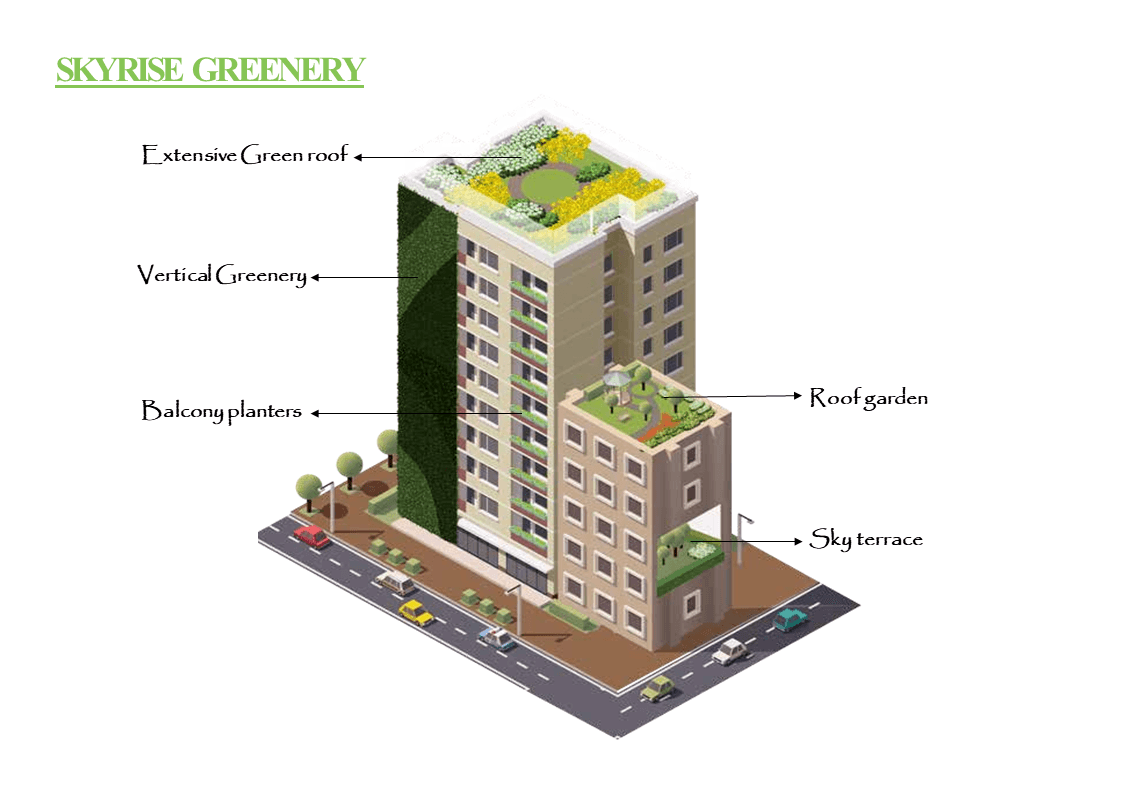

Rapid urban growth is transforming city skylines, with high-rise developments, residential towers, and commercial complexes becoming defining features of modern cities. As development intensifies, traditional ground-level parks and gardens alone are no longer sufficient to meet the environmental and social needs of growing urban populations. Skyrise greening addresses this challenge by extending vegetation skywards within the built environment through the greening of building facades, balconies, mid-level terraces, and rooftop spaces.
At Shama Landscape Architects, we believe that skyrise greening is an essential step toward the future of urban design, integrating landscape architecture with vertical development to create healthier, more sustainable, and more beautiful cities where nature remains a vital part of urban life.
1. Journey of Skyrise Greening
Skyrise greening is a concept that has developed over time in response to the search for innovative ways of integrating nature in densely populated urban environment. This development shows a new approach to how urban landscapes are designed and experienced every day, as well as how cities, architecture, and nature relate to each other.
Before 1990s: Greening of Urban Infrastructure
The earliest form of urban greening focused primarily on introducing vegetation to the existing infrastructure. Elements such as concrete columns of flyovers, walkways, overhead bridges and vertical surfaces were gradually transformed through the use of climbing plants such as Ficus pumila and flowering species like Bougainvillea. These interventions demonstrated how vegetation could soften hard urban structures while improving visual appeal and environmental quality.

1990s - 2000s: Integrating Greenery with Architecture
As urban areas expanded vertically, architects and landscape architects began integrating nature directly into building designs rather than simply adding plants on existing structures. Rooftop gardens, green roofs, planted terraces, and vertical greenery systems became increasingly common. This change transformed the role of landscape design, taking it off the ground and making it a core part of how buildings are created and experienced, creating healthier, visually appealing and more sustainable cities.
2000s - Present: The Shift Towards Biophilia
In the 21st century, skyrise greening has moved beyond just making buildings aesthetically pleasing to embracing biophilia - the innate human tendency to seek connections with nature. As a result, skyrise greening has increasingly been recognized and implemented as a sustainable means to enhance the built environment, reduce energy usage, and attract biodiversity back into the city. Today, skyrise greening includes living walls, green facades, rooftop gardens, sky parks, vertical forests, and continues to evolve into various innovative forms to meet the needs of city life.
2. How Shama Landscape Architects contributes to the Skyrise Greening Journey
Shama Landscape Architects plays an important role in advancing skyrise greening by integrating landscape design directly with architectural development. Rather than treating greenery as an afterthought, the firm collaborates closely with architects to ensure that vegetation becomes a fundamental part of building design. Through the creation of rooftop gardens, elevated landscapes, and planted terraces, the firm helps develop spaces that enhance both ecological performance and human wellbeing.
3. Benefits of Skyrise Greening
Environmental Benefits.
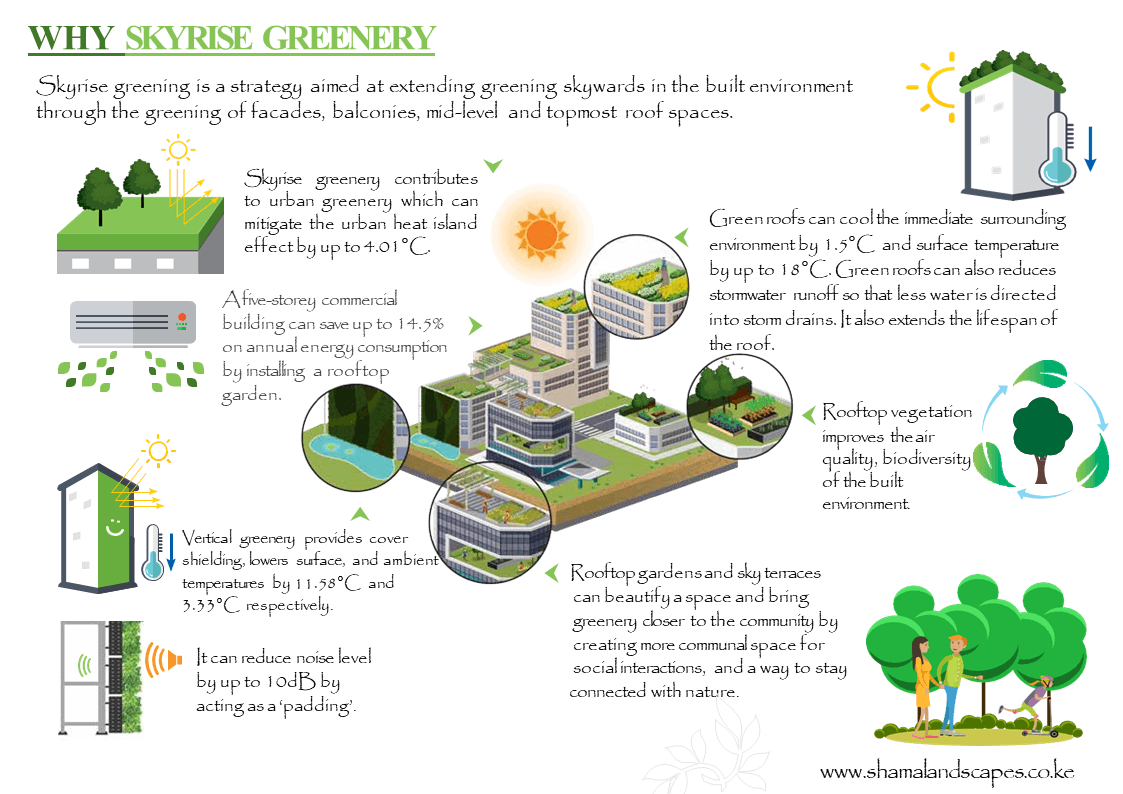
- Mitigation of the Urban Heat Island Effect: Green surfaces reduce the temperature of heat-absorbing materials like concrete
- Improved Air Quality: Plants absorb carbon dioxide and other air pollutants during photosynthesis and filter dust from the air, contributing to cleaner urban air.
- Stormwater Management: The growing medium and vegetation capture and retain rainwater, which slows down runoff and helps reduce the risk of floods.
- Enhanced Biodiversity: Skyrise greenery creates new habitats and ecological corridors for urban wildlife like birds and insects.
Economic Benefits
- Increased Property Value: Buildings with integrated green features are more attractive and can command higher property and rental values.
- Energy Efficiency
Social and Health Benefits
- Enhances Community Spaces
- Improves Well-being and Mental Health: Access to greenery, reduces stress, boosts mood, and promotes overall mental wellbeing.
Bosco Verticale, Italy.
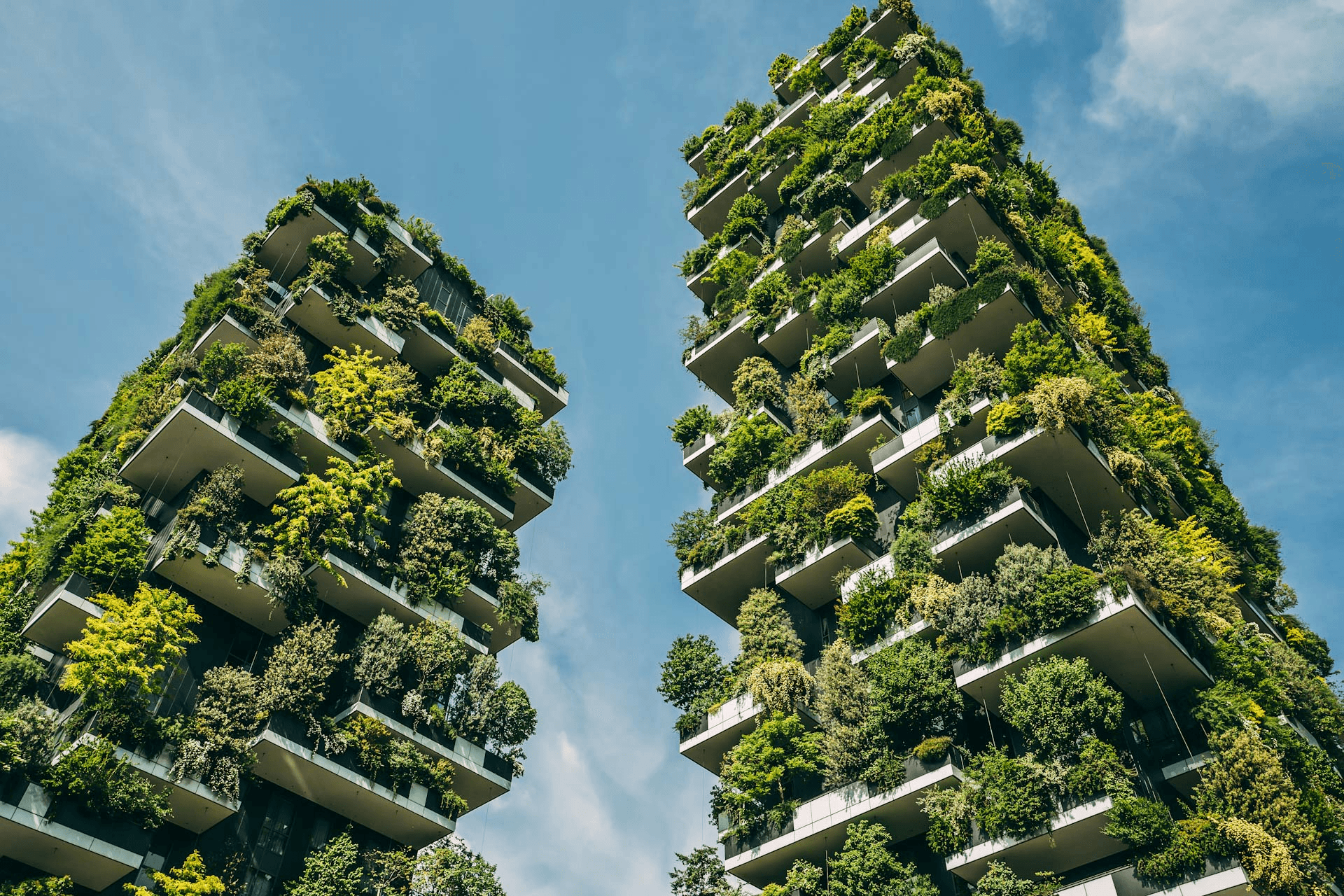
Bosco Verticale also known as Vertical Forest, is a pair of residential towers covered with over 20,000 trees, shrubs, and plants. This project demonstrates how vertical greenery can improve air quality, reduce noise, and create a microclimate that cools the surrounding city. It has become a benchmark for sustainable urban design worldwide.
4. Key Design Considerations
- Structural load capacity for soil and vegetation: Structural reinforcement may be necessary for heavy green roofs or vertical gardens in order to support the extra weight of soil, plants, and water.
- Efficient irrigation systems and drainage layers: Efficient irrigation systems and proper drainage prevent to waterlogging, protect the building structure, and ensure healthy plant growth.
- Plant selections: Plant species that can tolerate rooftop conditions
- Protection against strong winds at high elevations
- Long-term maintenance planning
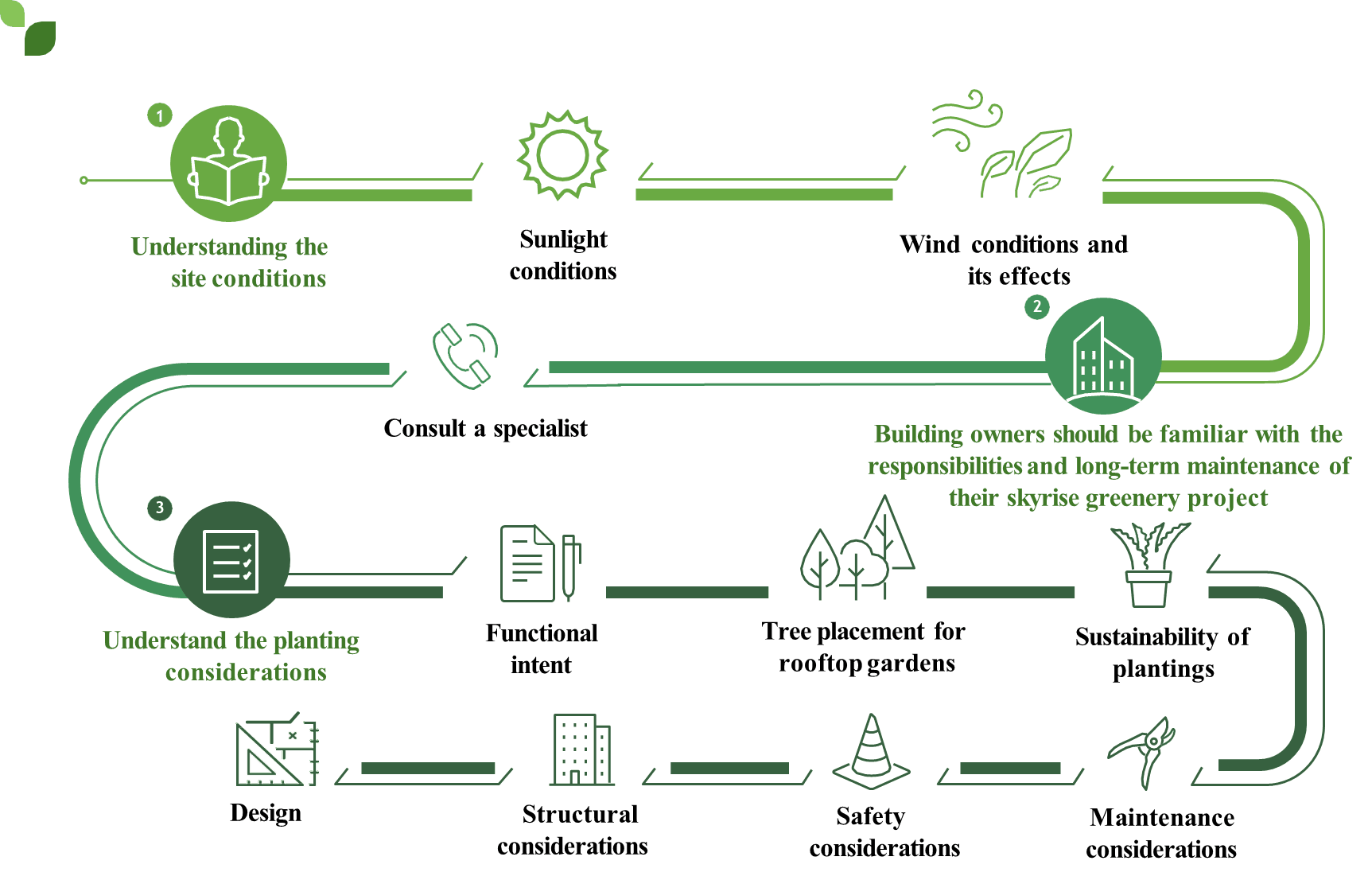
Steps to Implementing Effective Skyrise Greening
5. Conclusion: Future of Skyrise Greening
At Shama Landscape Architects, we are committed to advancing this vision by designing landscapes that extend beyond the ground and into the vertical fabric of the city. Through thoughtful planning, sustainable design strategies, and a deep understanding of landscape architecture, we create green environments that enhance both architecture and urban life.
By embracing skyrise greening, we can shape cities where nature and architecture coexist, creating healthier, more sustainable, and more inspiring urban spaces for the future.